DNC100 Final Project · By Rohit

Sculpted in Pixels

AI, Bharatanatyam, and the Democracy of Misrepresentation

When AI generates Indian classical dance, it copies the movement. It also copies a century of political erasure that decided what the movement looks like in the first place.

Section 02 · A Visual Test

The real and the simulated

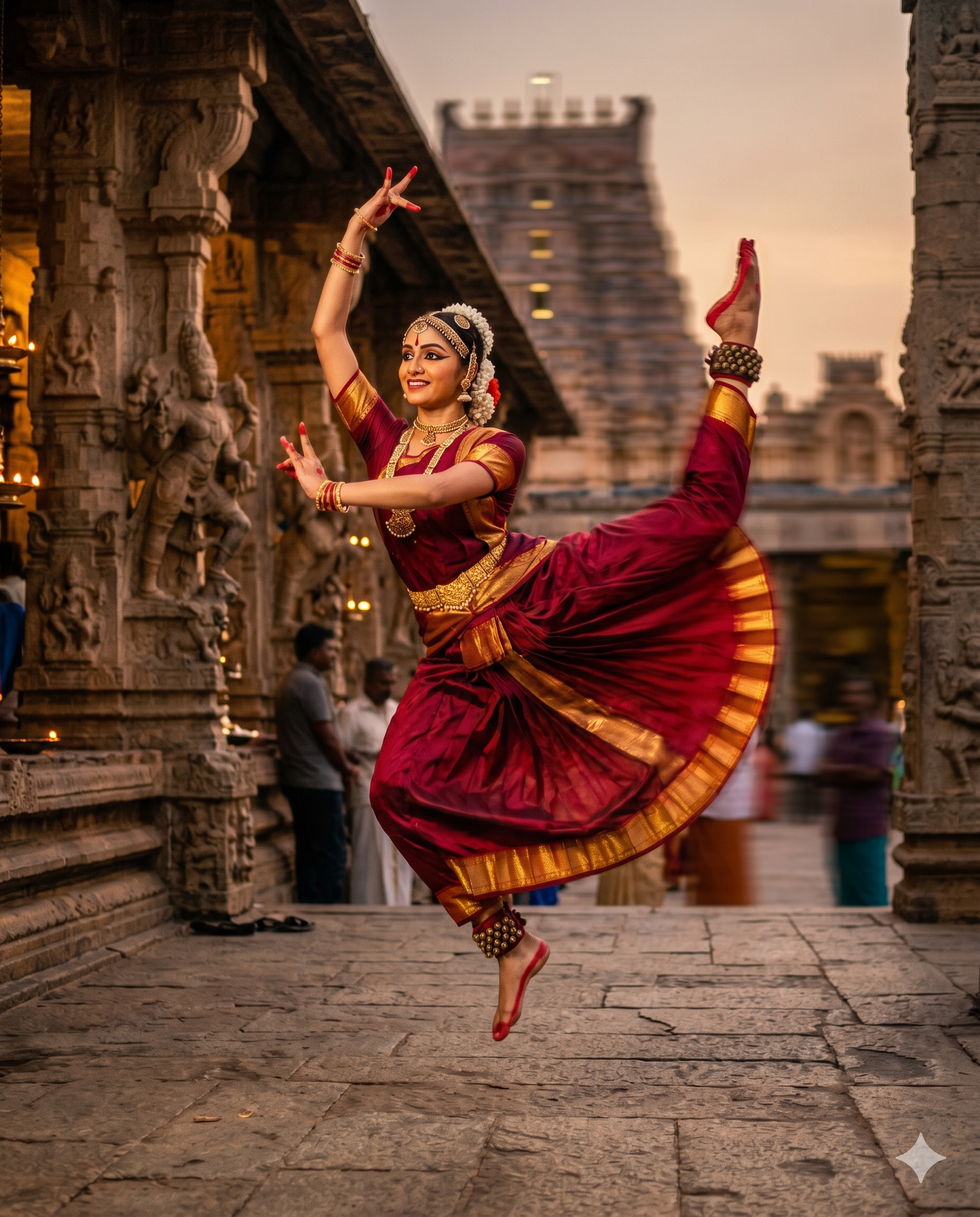
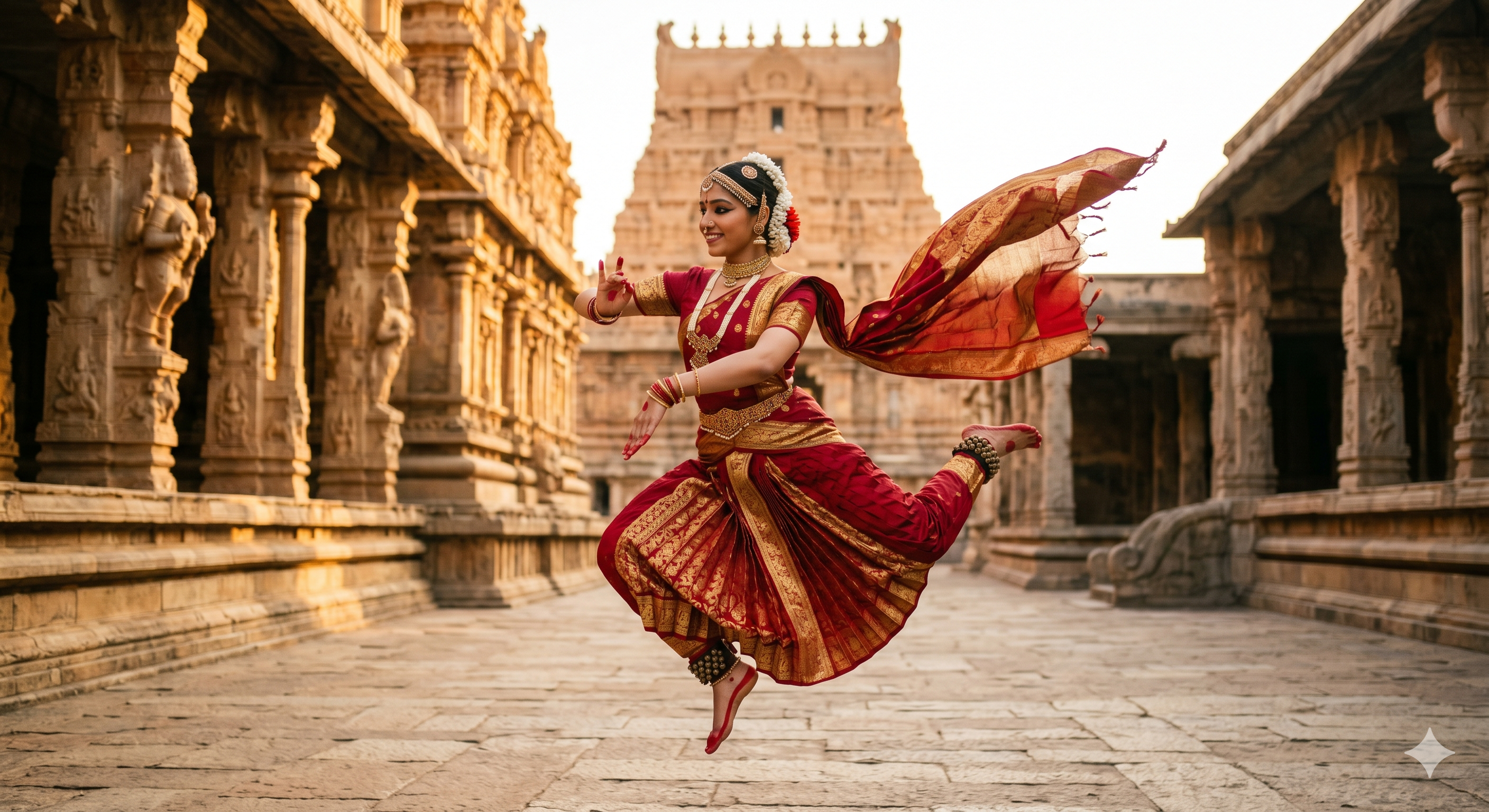
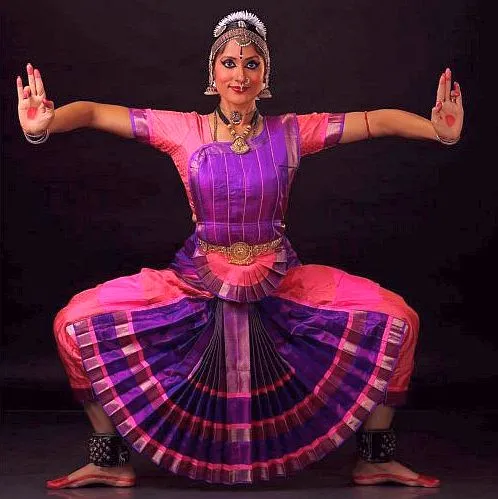
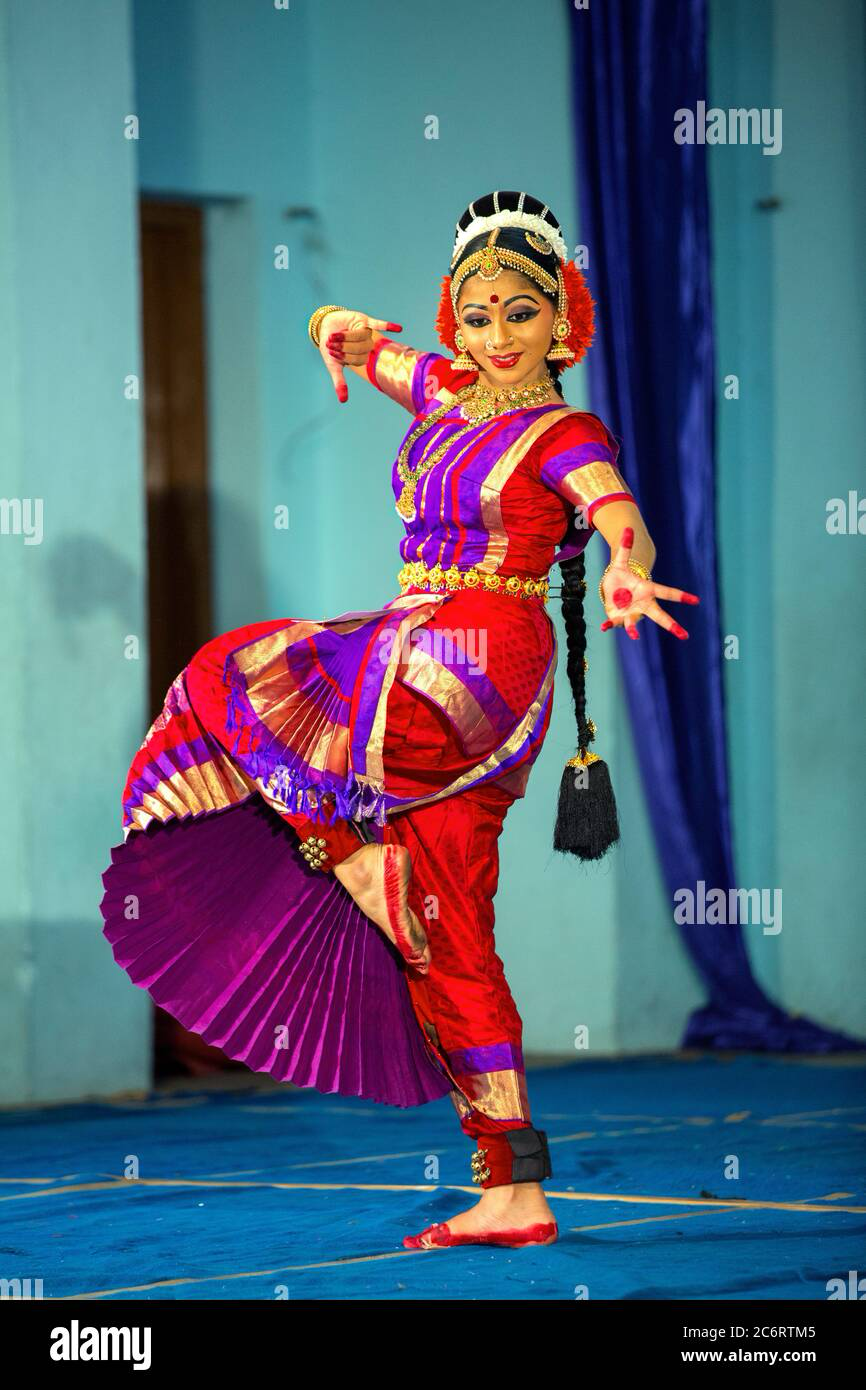
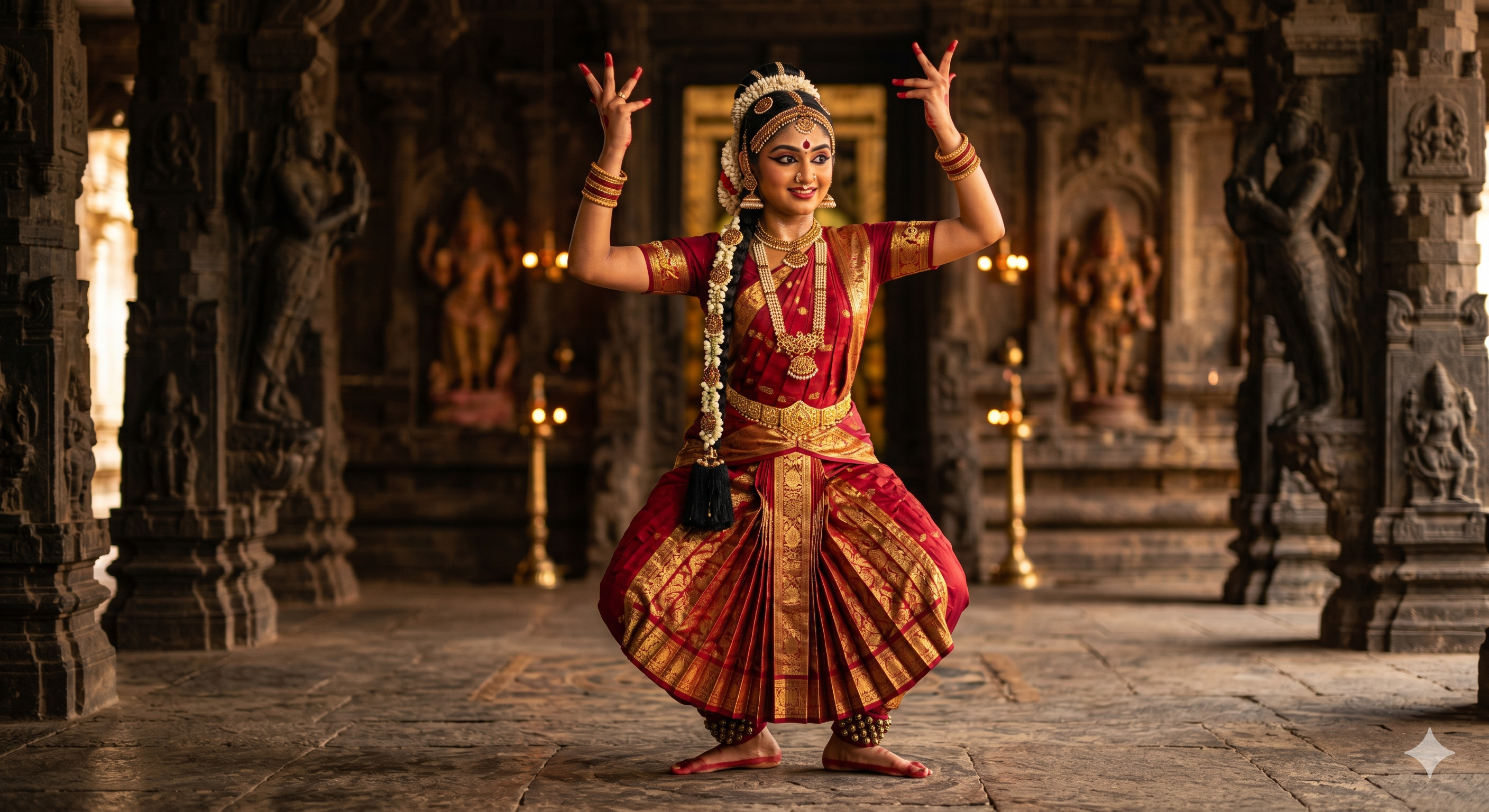
What you're looking at is a real Bharatanatyam photograph. Drag the handle to the right to overlay an AI generated "Indian classical dance" image on top of it. The further you reveal the AI, the more its borrowed vocabulary and structural inaccuracy come into view.

Past 25% drag

A mudra used without emotional context. In Bharatanatyam, every hand gesture has a specific narrative meaning. The AI keeps the shape and drops the meaning.

Past 50% drag

Costume elements stitched together from different regional traditions. The model cannot tell Bharatanatyam apart from Kathak or Odissi.

Past 75% drag

An anatomically impossible position. No trained dancer holds this pose. The model is optimizing for visual appeal, not cultural accuracy.

Fully revealed

AI produces the signifier and discards the signified.

Drag the handle right to reveal the AI version.
Section 03 · Bridge

A New Medium, Not a New Problem

Every era found a way to represent dance without being dance.

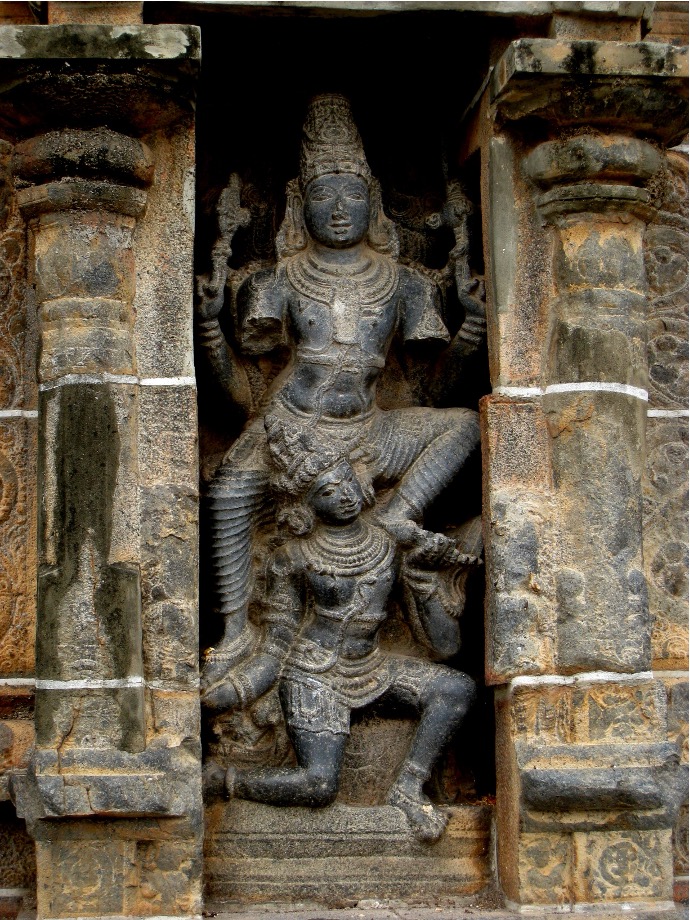
Stone carving from Thillai Nataraja Temple, Chidambaram, Tamil Nadu — Chola-period granite sculpture depicting a dance posture
12th–13th century

The Stone Carving

Carvings at temples like Thillai Nataraja in Chidambaram represented Sadir, the form later renamed Bharatanatyam, for centuries. The sculptor knew what they were carving. They lived inside the tradition. This granite carving sat in one temple for a thousand years.

Embedded knowledge
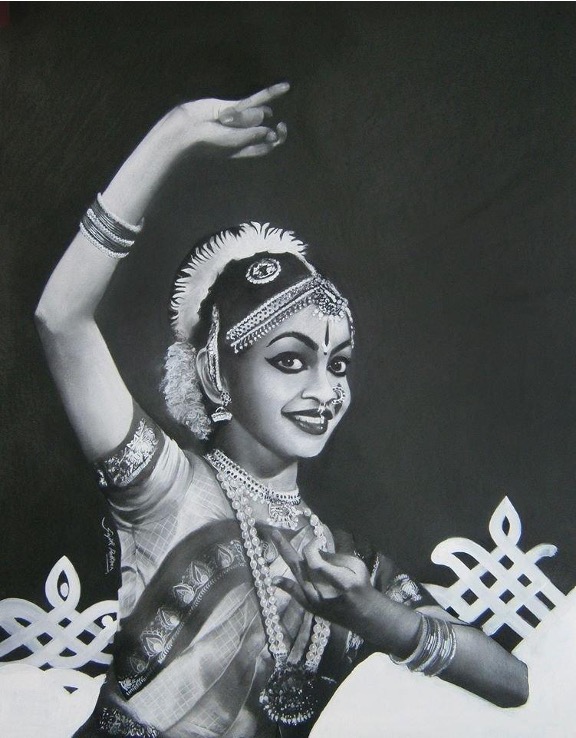
Artwork depicting a Bharatanatyam dancer
Mid 20th century

The Photograph

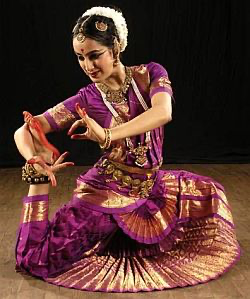
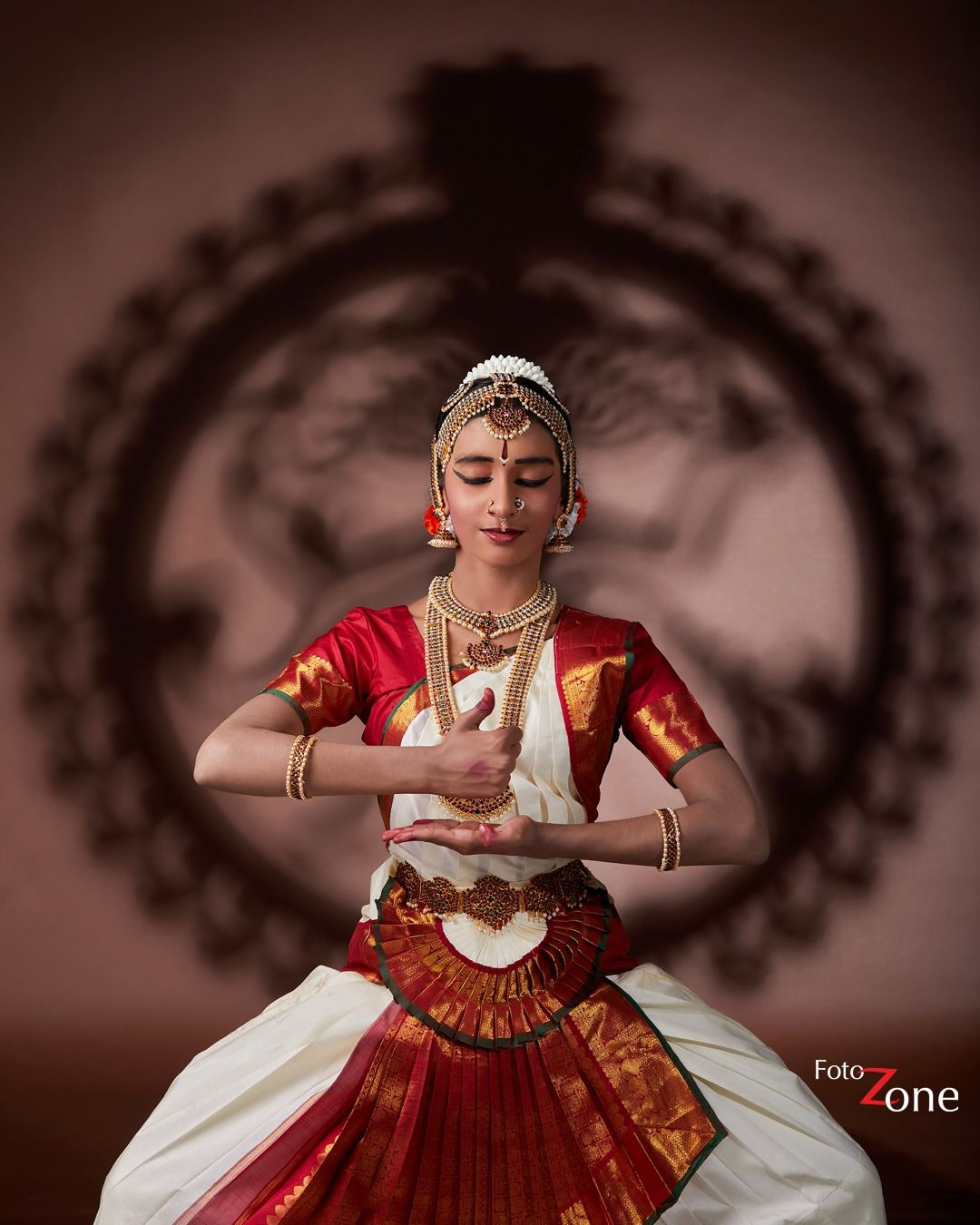
Photography froze real performances into a single frame. A good photograph can still hold rasa — in the eyes, the hands, the expression caught mid-abhinaya. But it captures one moment, not the full arc. The photographer was in the room. They knew what they were looking at.

Documented reality
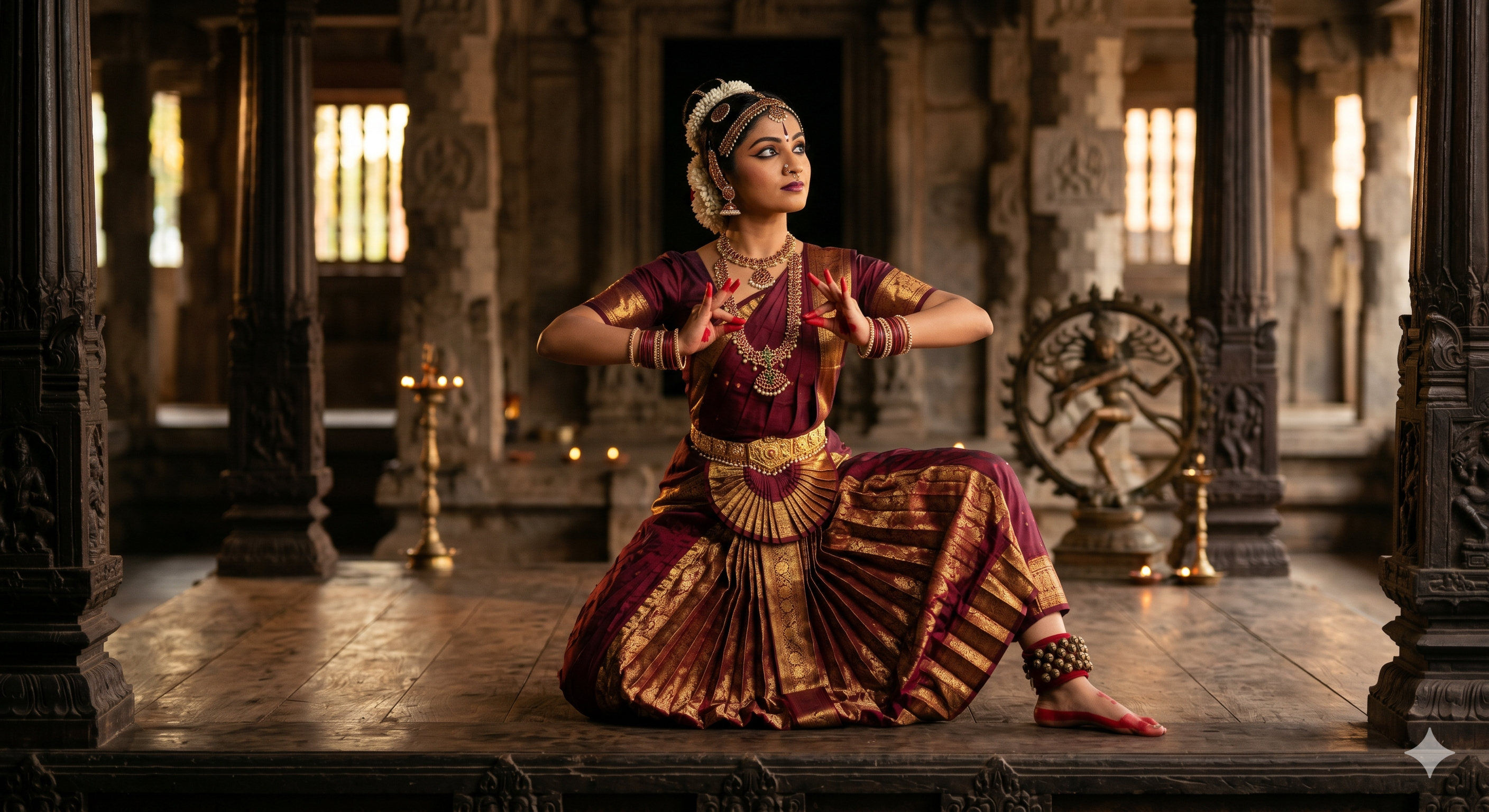
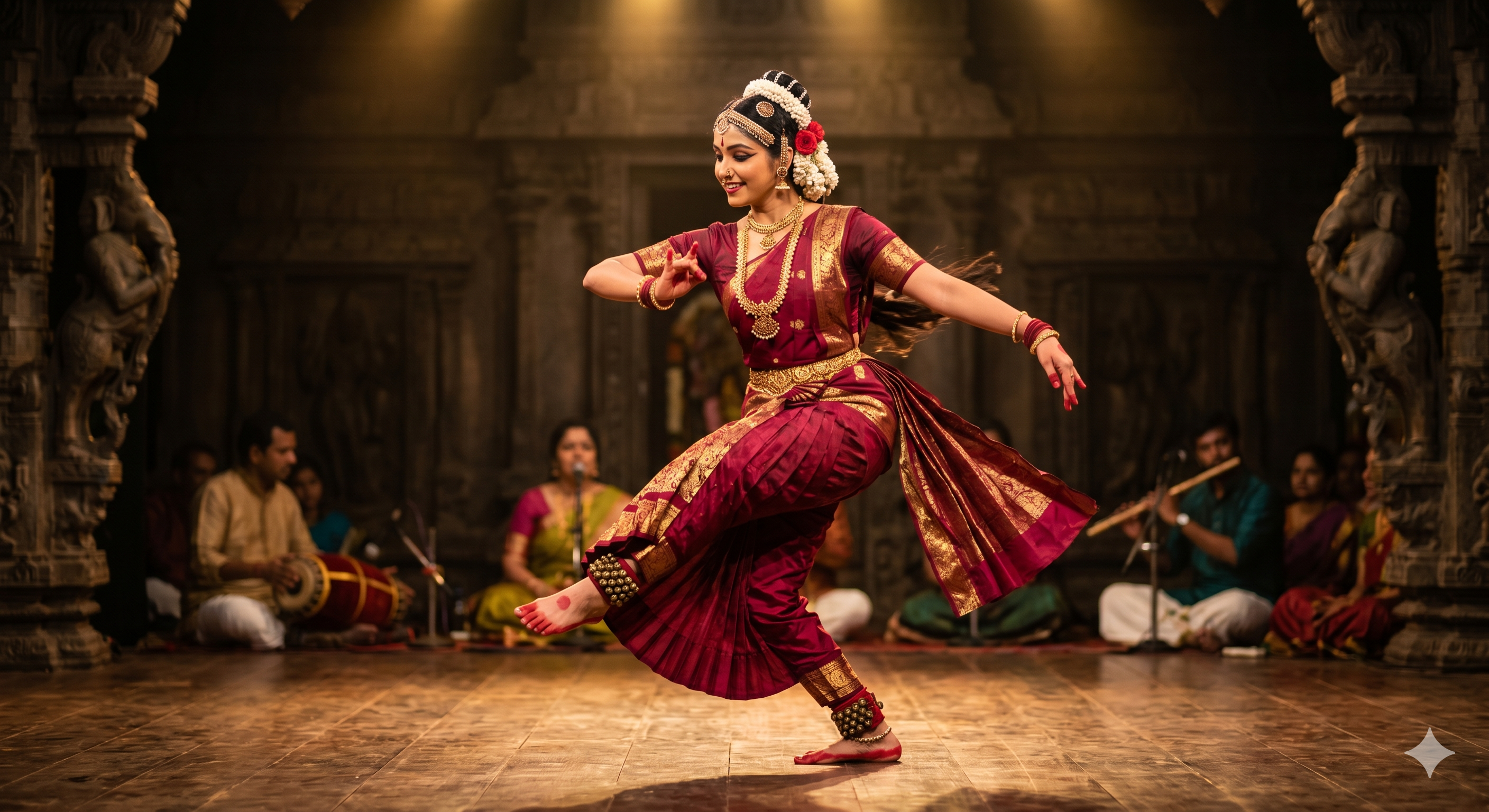
AI generated rendering of an Indian classical dancer
2025

The Prompt

Someone typed "Indian classical dance" and walked away. No cultural knowledge. No tradition. No accountability. Thousands of views and no disclaimer.

Zero context

This is KOYAL — the video this project is about

Section 04 · Genealogy

What Did AI Learn?

A horizontal timeline. Seven moments. Each one adds something to what "Indian classical dance" means as a cultural object, and each one quietly erases something else. By the time AI starts learning from the internet, the negative space of this archive is already enormous.

  1. 01 Pre-colonial

    The Original Custodians

    Devadasi Tradition

    Devadasis were the sole practitioners of Sadir for centuries. Dance was ritual worship, emotionally alive, community owned.

    Added
    • Living tradition
    • Rasa transmission
    • Community ownership
    Erased
    • Nothing yet. This is the baseline.
  2. 02 1857 to 1920s

    The Criminalization

    Colonial Period

    British colonial law labeled devadasis as prostitutes. The Anti-Nautch movement banned their performances. Colonial morality destroyed the original patronage system.

    Added
    • Victorian moral framework
    • Colonial reform discourse
    Erased
    • Devadasi livelihoods
    • Original patronage
    • Community legitimacy
    • Inter-generational transmission
  3. 03 1930s

    The Sanitization

    Rukmini Devi Revival

    Rukmini Devi Arundale founded Kalakshetra in 1936. She stripped the erotic and devotional devadasi elements and reframed the dance as spiritual and brahminical.

    Added
    • Institutional structure
    • Middle-class acceptability
    • Sanskrit textual backing
    • Standardized syllabus
    Erased
    • Devadasi genealogy
    • Sensuality and shringara
    • Original community ownership
    • Regional variation
  4. 04 1953 to 1959

    The Nationalization

    SNA Recognition

    The Sangeet Natak Akademi elevated Bharatanatyam alongside Kathak, Kathakali, and Manipuri into the official classical canon. The category itself became a political tool.

    Added
    • State legitimacy
    • National identity
    • Institutional funding
    • Canonical hierarchy
    Erased
    • Regional variation
    • Folk forms
    • Non-brahminical practices
    • Plural genealogies
  5. 05 1990s to 2010s

    The Digitization

    Internet Documentation

    Bharatanatyam became the most documented Indian classical form online. YouTube tutorials, academic papers, diaspora websites, almost all of it in English.

    Added
    • Global reach
    • Diaspora preservation
    • Digital archive
    • Searchability
    Erased
    • Context
    • Nuance
    • Forms not as heavily documented
    • Embodied transmission
  6. 06 2015 to 2022

    The Inheritance

    AI Training

    AI image and video models trained on internet data absorbed the post-revival sanitized version of Bharatanatyam as their default template for Indian classical dance.

    Added
    • Generative capability
    • Zero-barrier creation
    • Synthetic plausibility
    Erased
    • Awareness of what was already erased
    • The negative space of the archive
  7. 07 2025

    The Copy of a Copy

    KOYAL

    KOYAL generates Indian classical dance without naming a specific form. It draws from Bharatanatyam's visual vocabulary, the most documented form online, and produces aesthetics without rasa, grammar without meaning.

    Added
    • Thousands of views
    • Viral reach
    • Frictionless reproduction
    Erased
    • Everything previous erasures already removed
    • Now amplified at global scale
    • And without anyone naming the chain

Click any node to expand. Scroll horizontally with drag, swipe, or the arrows.

Section 05 · The Literacy Test

Can You Tell the Difference?

Three real Bharatanatyam photographs. Three AI generated images of "Indian classical dance." Choose for each. Submit when ready.

AI rendering of an Indian classical dancer
Bharatanatyam dancer in performance
AI rendering of an Indian classical dancer
Bharatanatyam dancer in performance
AI rendering of an Indian classical dancer
Section 06 · The Readings

A Constellation of Arguments

Five readings. One claim at the center. The lines between them animate the argument. Erasure was already structural. AI just gave it global reach.

AI crystallizes the erasure that already happened
2004
Uttara Asha Coorlawala
2009
Pallabi Chakravorty
2022
Anurima Banerji
2009
Anita Cherian
2016
Anurima Banerji
Hover for preview · Click to expand
Section 07 · The Silence

The Silence is Not Accidental

Based on Banerji 2022. Explore why the people most qualified to critique AI misrepresentation cannot safely speak up.

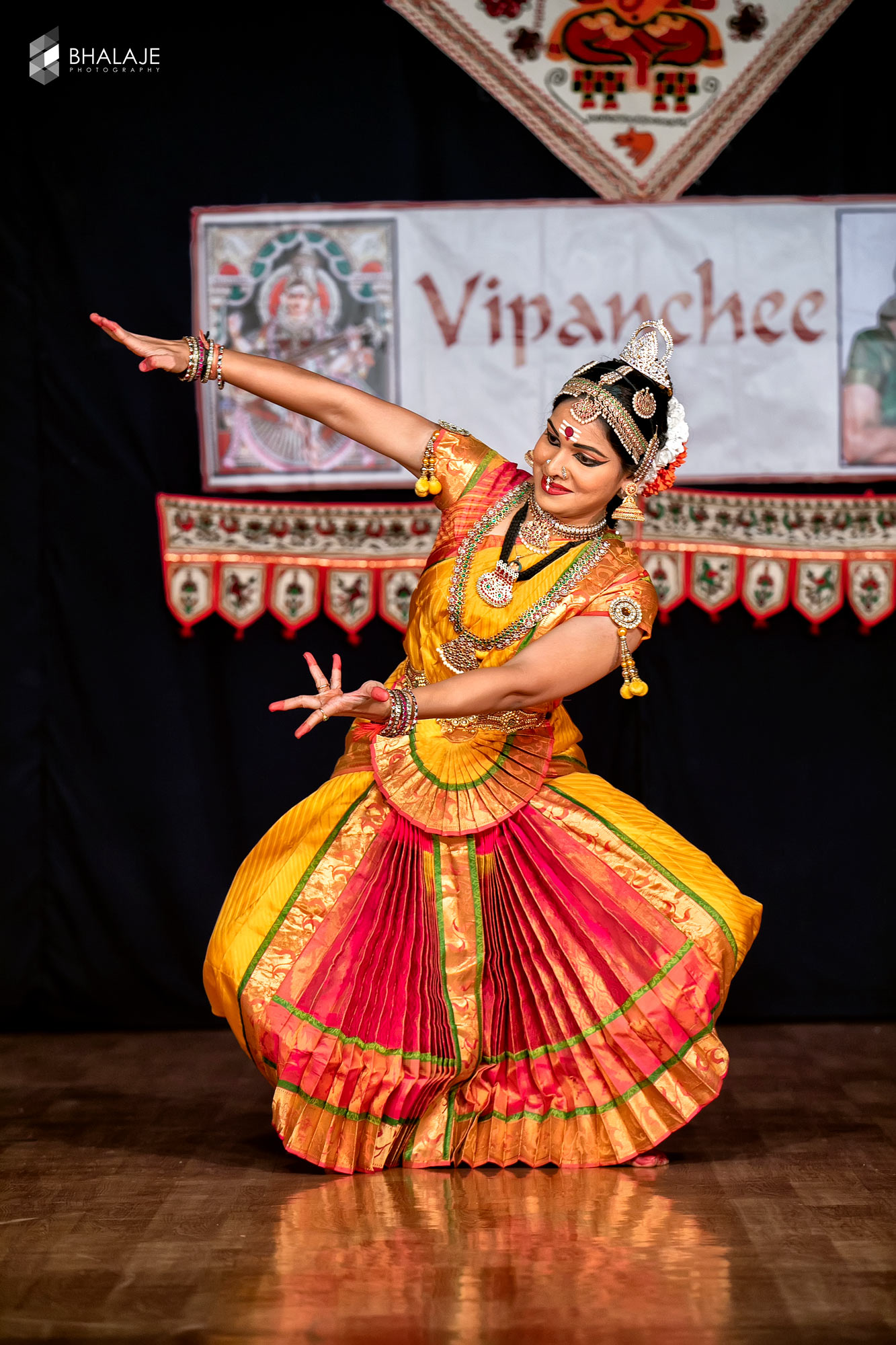
Bharatanatyam dancer in a poised, grounded stance

You are a trained Bharatanatyam dancer. You have seen KOYAL. You know it is culturally inaccurate. What do you do?

cit. Banerji, Anurima. 2022. "The Award-Wapsi Controversy in India and the Politics of Dance." South Asian History and Culture.
Section 08 · Conclusion
"

AI does not erase tradition.
It crystallizes an erasure that already happened.

"

This project started with a concession. Sculptures represented Sadir, the form later renamed Bharatanatyam, for centuries. So did paintings, photographs, film. Every era found a new medium to capture what dance looks like without being the dance itself. The Chola bronze sculptor was not wrong to carve. The photographer was not wrong to shoot. AI is not wrong to generate.

But each of those earlier makers was in the room. The sculptor knew the tradition. The photographer documented a living body. The person who typed "Indian classical dance" into an AI generator in 2025 was not. And the bronze sat in one temple. KOYAL has thousands of views and no disclaimer. The medium is not the problem. What the medium inherited is. The dance AI learned from was already cleaned up. Colonial law criminalized the devadasis. Brahminical reform sanitized what remained. The Sangeet Natak Akademi folded a handful of cleansed forms, with Bharatanatyam at the front, into the official classical canon. The internet documented that canon in English at scale. AI did not make those choices. It just copied them. To the entire world. Without knowing it had.

Three things this project is arguing:

  • Trace the full chain. Colonial law stripped devadasis of legitimacy, brahminical reform sanitized what was left, the Sangeet Natak Akademi turned that cleaned-up version into the official canon, the internet documented it at scale, and AI learned from that.
  • Stop calling AI-generated dance videos "Indian classical dance" without explaining what they are actually based on and what they leave out.
  • When writing about Bharatanatyam or any related form, include the devadasis. They built it. They were written out of their own lineage, and that erasure is what AI is now reproducing at scale.

If AI is just the newest medium in a long line of representation, then the question was never whether the copy is good. The question is whose original was excluded so the copy could be made.
Bibliography

Five readings ground this project's argument.

  1. 01
    Banerji, Anurima. 2016. "The Queer Politics of the Raj." Modern Asian Studies 50 (1): 81–99.
  2. 02
    Banerji, Anurima. 2022. "The Award-Wapsi Controversy in India and the Politics of Dance." South Asian History and Culture.
  3. 03
    Chakravorty, Pallabi. 2009. "Moved to Dance: Remix, Rasa, and a New India." Visual Anthropology 22: 211–228.
  4. 04
    Cherian, Anita. 2009. "Institutional Maneuvers, Nationalizing Performance, Delineating Genre: Reading the Sangeet Natak Akademi Reports 1953–1959." Third Frame: Literature, Culture and Society 2 (3): 32–60.
  5. 05
    Coorlawala, Uttara Asha. 2004. "The Sanskritized Body." Dance Research Journal 36 (2): 50–63.

DNC100 Final Project · Critical readings on Indian classical dance and AI-generated media.